
thinking about a vasectomy?
A vasectomy is a safe and effective form of permanent birth control for men.
Our team can help guide you through the process and answer questions without judgment.
What is a vasectomy?




Quick
Procedure
Minimal
Recovery
Highly
Effective
No Effect
On Hormones
A vasectomy is a minor procedure that helps prevent pregnancy by blocking sperm from mixing with semen. It does not affect testosterone, sex drive, erections, or orgasms.
Common questions
Is a vasectomy an effective form of birth control?
Yes! Vasectomy is a highly effective effecitve (over 99%). However, it does take up to three months to start working. Your semen must be checked after the vasectomy to make sure there is no sperm in it. Until then, you must use another form of birth control to prevent pregnancy. Most people have no more sperm in their seme the first time it is tested.
Is a vasectomy safe? any side effects?
Vasectomy is very safe, low-risk procedure.
Mild bruising is the most common reaction.
Other rade complications include:
- infection (very rare and can be treated with antibiotics)
- a painful bump on the vas (sperm granuloma)
- bleeding into the scrotum, causing a collection of blood (scrotal hematoma)
Some people have pain in the testes that last a few days ( about 5%). This pain can be treated with ibuprofen or naproxen. Chronic pain is very rare (about 0.1 – 1%).
Does a vasectomy hurt?
Patients expierence little or no pain during the vasectomy. The provider uses a spray applicator or avery fine needle for local anthesia. This numbs the skin and area around the tubes. Patients shouldn’t feel sharp pain after that but may still feel pressure or movement. General anthesisa is no necessary. Some providers will offer light edation if requested by patient.
Is a vasectomy reversible?
Vasectomies are permanent. A persn should only get a vasecty if they are 100% positive they don’t want to be able to get someone pregant for the rest of their life. A surgical procedure does exist to reverse vasectomy, but this procedure is expensive and does not always work.
How is a vasectomy done?
A provider reaches the vas tubes through a tiny skin opening in the scrotum. The tubes are cut and sealed using heat and a tiny clip or sutures. This prevents the passage of sperm. The small puncture heals quickly.
What is the recovery from a vasectomy like?
Generally, a person can return to work or light activity within two days. There may be some soreness for a day or two after the procdure. A cold compress or ice pack and over-the-counter pain medications can help. Wearing tight underpants or a jock strap can decrease pain with movement. A person should avoid any vigourous activity, including sports and sex, for the first 3-7 days after the vasectomy
How soon after a vasectomy can i have sex?
A person should avoid sex or masturbation for one week. Doing that earlier won’t affect your healing, but it can cause pain in your groin or bleeding in your semen. But remember, the vasectomy won’t be effective right away. A Post Vasectomy Semen Analysis (PVSA) will be necessary to ensure that the semen no longer ontains sperm.
Does a vasectomy affect my sex drive or my ability to enjoy sex?
After a vasectomy, sexual function does not change. Sensations, erections, and ejaculations will be the same, exept that the semen no longer contains sperm. After a vasectomy, the only way to tell the difference in the semen is with a microscopic semen anlysis. Vasectomy does not prevent ejaculation.
no insurance? we can help!
Cost & coverage information for vasectomy services.
Eligible uninsured men age 21+ may qualify for no-cost vasectomy services through our program. Patients with insurance are also welcome and may be referred to a specialist depending on their coverage and provider network.
Our team can help walk you through the process, answer questions, and help determine what options may be available to you.
✔ Uninsured options available for qualifying patients
✔ Insurance referrals accepted
✔ Friendly, confidential support
✔ Appointment required to begin the process
THE Internal Male ANATOMY
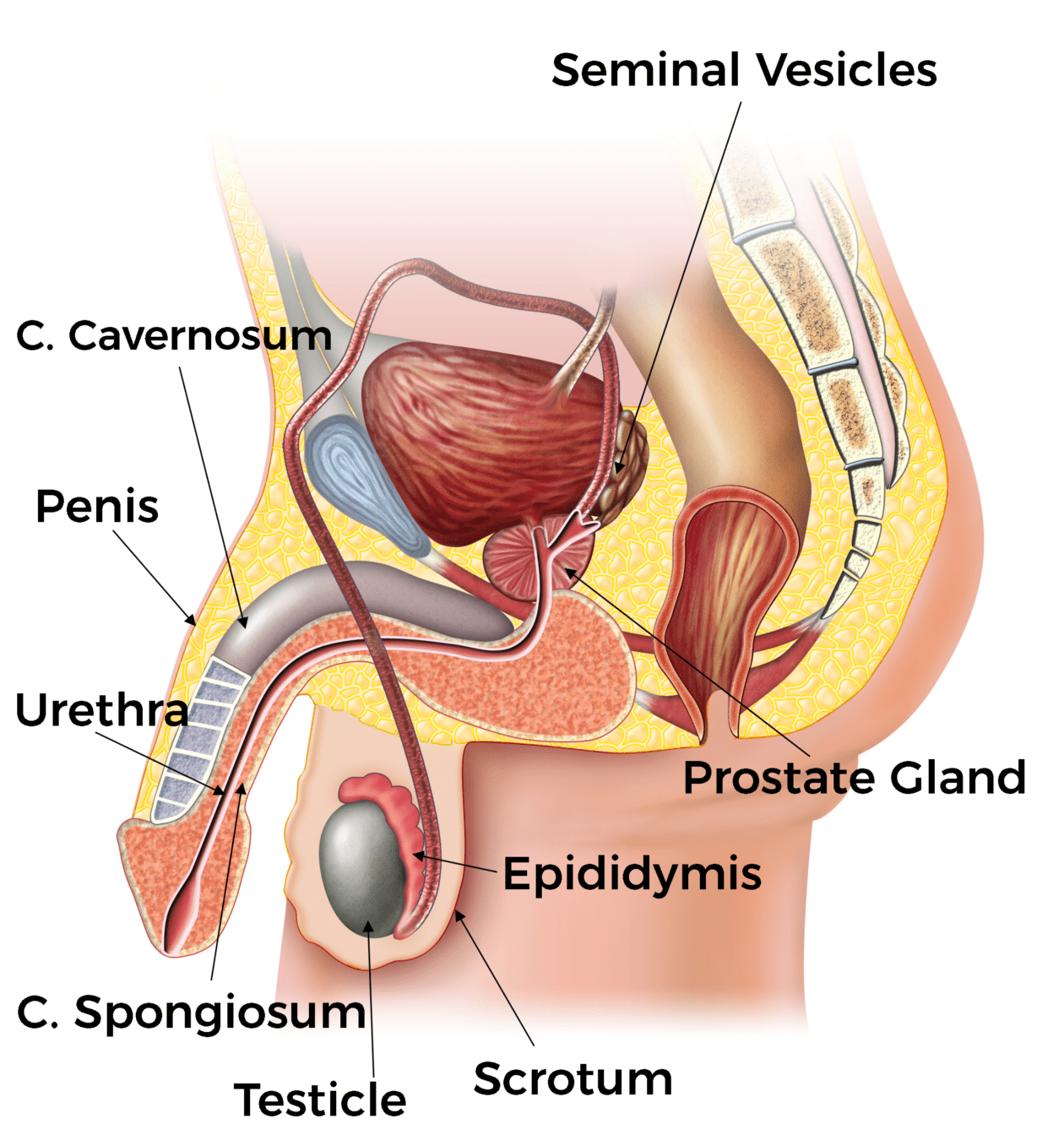
- Scrotum: Skin sac that holds the testicles.
- Testicles: Two egg-shaped organs where sperm are made.
- Epididymis: Tubes which carry sperm from the testicles to the vas deferens.
- Urethra: Tube that carries urine and semen out of penis.
- Seminal Vesicles: Glands which produce fluid that combines with sperm.
- Penis: Shaft with an enlarged tip (glans) that may put sperm into the vagina.
- Corpus Cavernosum: Two tubes inside the penis which fills up with blood to make the penis hard when a man becomes sexually excited.
- Corpus Spongiosum: A column of erectile tissue in the center of the penis and surrounding the urethra. When filled with blood it enlarges and causes the penis to swell and become erect.
- Prostate Gland: Walnut-sized gland which surrounds the urethra and can be felt inside the rectum. It contracts rhythmically to squeeze the semen out when a man has an orgasm (comes).
More Resources
Men’s Health:
- Male Exams & Preventative Care
- STI Testing & Treatment
- How to Preform a Testicular Self-Exam
- Male Health Screenings by Age
Birth Control:
Reproductive Anatomy & Systems:
ACCESS ESPERANZA CLINICS DOES NOT PROVIDE OR PAY FOR ABORTIONS.

At Access Esperanza Clinics, we offer opportunities and hope for people to plan their futures and stay healthy. You can count on us for quality, affordable, and confidential care at all of our health clinics.
GET SOCIAL
Contact us!
Phone: 956-688-3700
Send Email: info@accessclinics.org
Access Esperanza Clinics is a Silver GuideStar participant, demonstrating a commitment to transparency. See www.guidestar.org.
Click here for our Privacy Policy: Privacy Notice for Website
The information provided on this site is intended for your general knowledge only and is not a substitute for professional medical advice or treatment. Please call Access Esperanza Clinics at 956-688-3700 to set an appointment at any of our clinics.
This website is supported in part by the Office of Population Affairs (OPA), in the Office of the Assistant Secretary for Health (OASH), of the U.S. Department of Health and Human Services (HHS) as part of a financial assistance award totaling $513,242 with 100% funded by OPA/OASH/HHS. The contents are those of the author and do not necessarily represent the official views of, nor an endorsement by, OPA/OASH/HHS, or the U.S. Government.
For more information, please visit OPA.hhs.gov.