
PREGNANCY 101
Your Future is Important!
- Women and their children are healthier.
- Parents and children get more education.
- Families have more money.
- Marriages are more likely to last.
- Violence among family members is less likely.
- Fathers are more likely to stay involved in their children’s lives.
Thinking carefully before you have sex makes good sense.
Take control of your life!
How do women get pregnant?
Once inside the vagina, sperm swim upwards through the opening of the cervix, through the uterus, and into the fallopian tubes. Sperm can live up to six days inside a woman. Even though the journey is a short six or so inches, it’s a difficult path, and only a few sperm will reach the woman’s fallopian tube.
A woman releases an egg (ova) every 30 days or so from one of her ovaries into one of her fallopian tubes. There is one ovary on either side of the uterus. Usually one ovary will release an egg one month, and then the other ovary will release an egg the next month.
If an egg is in one of the tubes, a sperm can join it (fertilize it). Once fertilized, the egg forms a single-celled unit called a zygote, and the change prevents any other sperm from getting through to the egg.
In the case of twins or multiples, it is possible for a woman to release more than one egg and for each to be joined by a sperm. This is how fraternal twins (multiples) are made. Identical twins are developed from a single fertilized egg that splits. Identical twins have nearly the same genetic makeup, but fraternal multiples are like any other sibling.
The zygote(s) divide(s) rapidly for a few days in the tube and then travels down into the uterus. It can take another couple of days for the zygote(s) to connect (implant) inside of the uterus for a pregnancy to begin.
Um, can I get pregnant if…?
The Female Body
Ovulation: An egg develops and matures then is released from the ovary each month.
Egg (Ova): Cell from a female that develops in the ovary and when joined with sperm can develop into a pregnancy. A woman is born with all of the eggs she will ever have.
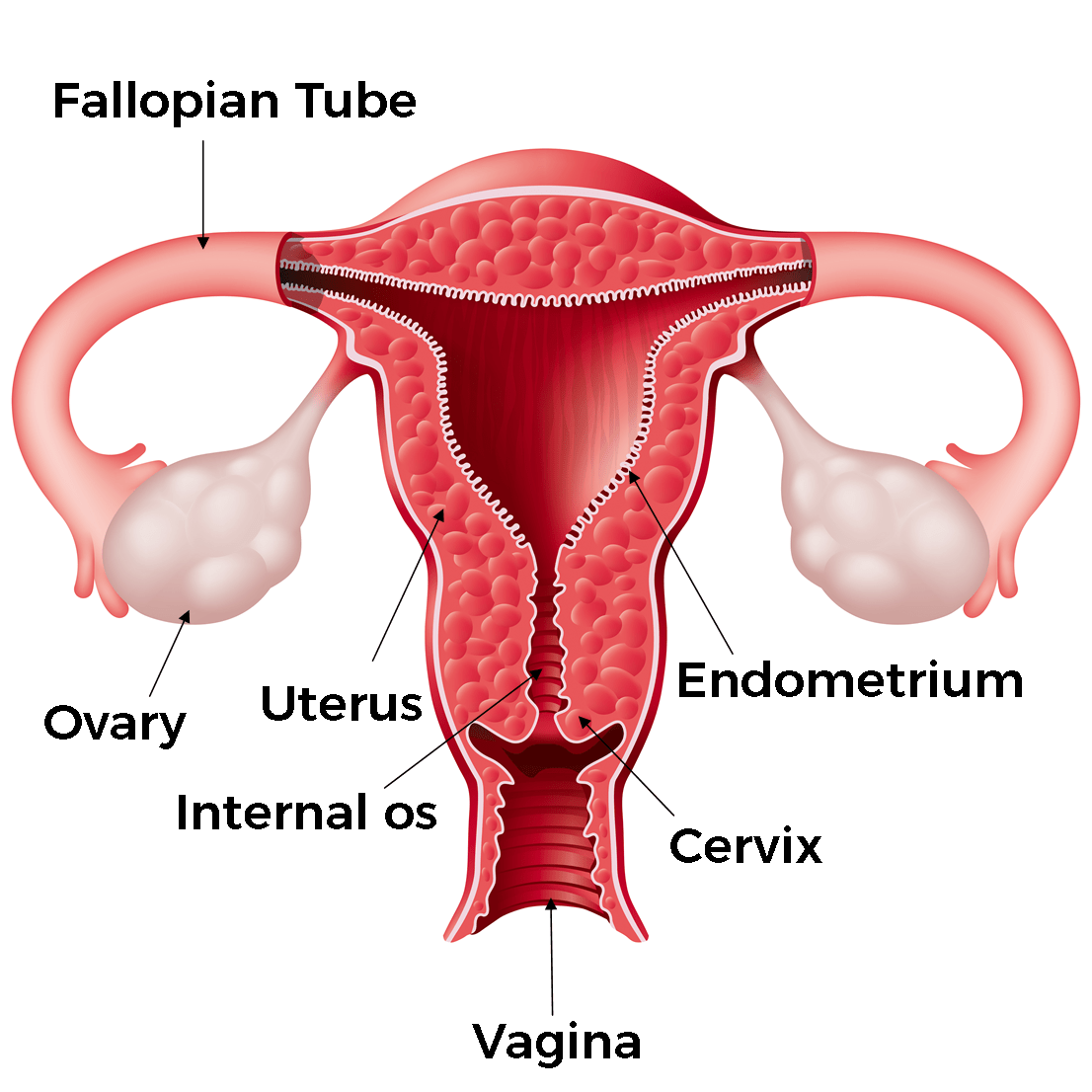
Fallopian Tube: A tube that leads from the ovary to the uterus. The egg and sperm join in the tube before traveling to the uterus.
Uterus (womb): A hollow pear-shaped organ made of strong muscles that support a pregnancy.
Endometrium: Inner lining of the womb where blood and nutrients build up each month. If there is no pregnancy, the blood and nutrients flow out of the vagina (menstruation or period).
Cervix: Firm round nickel-sized tissue at the end of the vagina that leads into the uterus.
Internal os: Small opening from the cervix into the uterus. It opens wider during childbirth.
Clitoris: A pleasure spot located where the inner lips join on the outside genital area. The part of the clitoris that shows is about the size of a pea, but it can extend several inches inside of an adult female’s body.
Outer Lips (Labia Majora): Larger pair of folds of skin without hair that surround the clitoris and urethra.
Inner lips (Labia Minora): Thinner smooth pair of folds of skin without hair that surround the clitoris and urethra.
Urethra (Urinary opening): Tube that caries urine out of the body.
Vagina: Tube where the penis is during sexual intercourse. The vagina is the birth canal for delivering a baby.
The Male Body
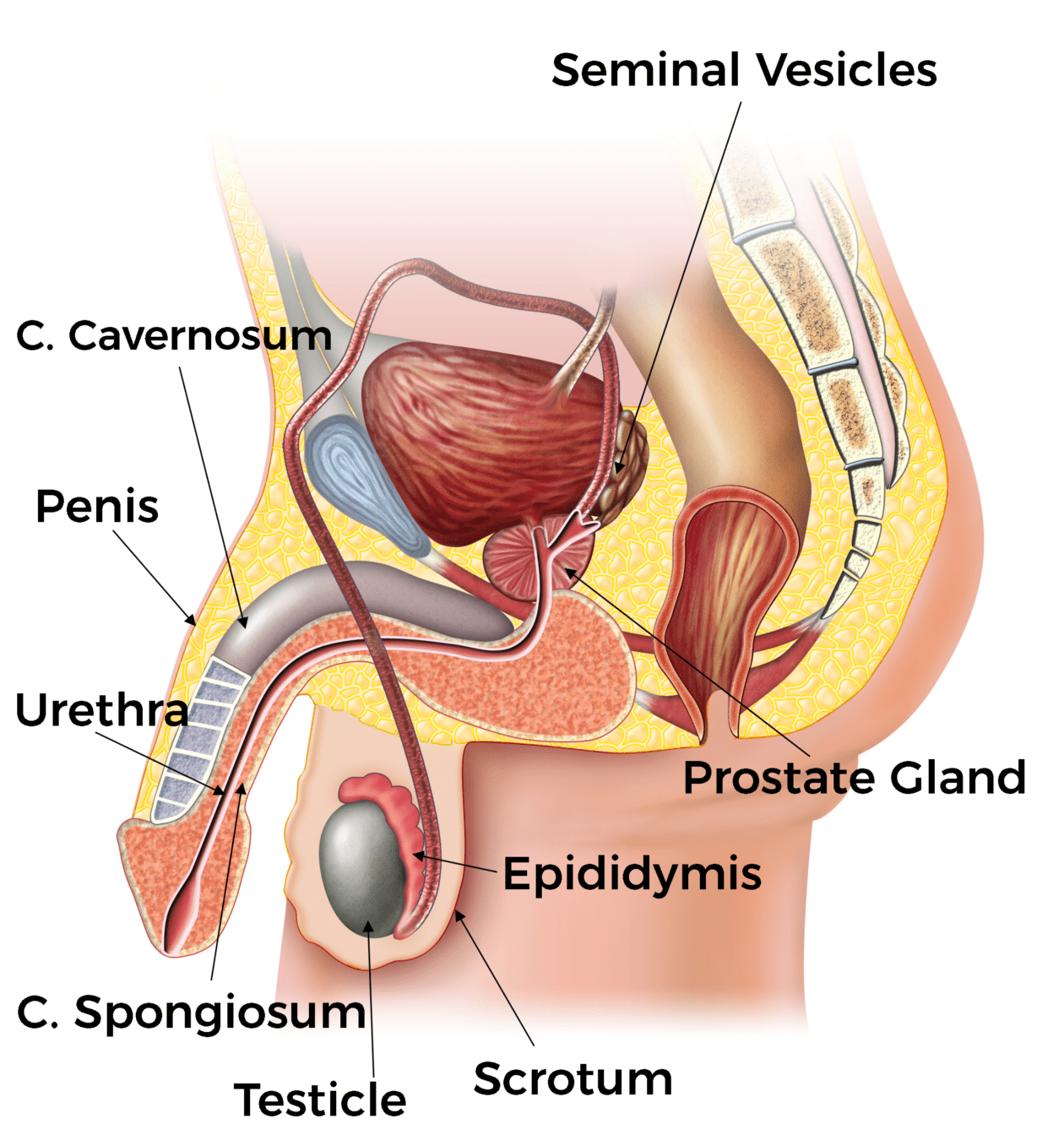
Testicles: Two egg-shaped organs where sperm are made.
Epididymis: Tubes which carry sperm from the testicles to the vas deferens.
Sperm Duct (Spermatic Duct): Tube that carries blood supply to testicles and sperm to urethra.
Urethra: Tube that carries urine and semen out of penis.
Semen: Mixture of sperm and other fluids.
Sperm: Cell from a male that combines with an egg from a female to make a baby.
Seminal Vesicles: Glands which produce fluid that combines with sperm.
Penis: Shaft with an enlarged tip (glans) that may put sperm into the vagina.
Corpus Cavernosum: Two tubes inside the penis which fills up with blood to make the penis hard when a man becomes sexually excited.
Corpus Spongiosum: A column of erectile tissue in the center of the penis and surrounding the urethra. When filled with bloo it enlarges and causes the penis to swell and become erect.
Foreskin: Skin covering the end of the penis. The foreskin is sometimes removed by a doctor or religious person (circumcision).
Prostate Gland: Walnut-sized gland which surrounds the urethra and can be felt inside the rectum. It contracts rhythmically to squeeze the semen out when a man has an orgasm (comes).
THE FEMALE BODY
Once inside the vagina, sperm swim upwards through the opening of the cervix, through the uterus, and into the fallopian tubes. Sperm can live up to six days inside a woman. Even though the journey is a short six or so inches, it’s a difficult path, and only a few sperm will reach the woman’s fallopian tube.
A woman releases an egg (ova) every 30 days or so from one of her ovaries into one of her fallopian tubes. There is one ovary on either side of the uterus. Usually one ovary will release an egg one month, and then the other ovary will release an egg the next month.
If an egg is in one of the tubes, a sperm can join it (fertilize it). Once fertilized, the egg forms a single-celled unit called a zygote, and the change prevents any other sperm from getting through to the egg.
In the case of twins or multiples, it is possible for a woman to release more than one egg and for each to be joined by a sperm. This is how fraternal twins (multiples) are made. Identical twins are developed from a single fertilized egg that splits. Identical twins have nearly the same genetic makeup, but fraternal multiples are like any other sibling.
The zygote(s) divide(s) rapidly for a few days in the tube and then travels down into the uterus. It can take another couple of days for the zygote(s) to connect (implant) inside of the uterus for a pregnancy to begin.
Um, can I get pregnant if…?
THE MALE BODY
Testicles: Two egg-shaped organs where sperm are made.
Epididymis: Tubes which carry sperm from the testicles to the vas deferens.
Sperm Duct (Spermatic Duct): Tube that carries blood supply to testicles and sperm to urethra.
Urethra: Tube that carries urine and semen out of penis.
Semen: Mixture of sperm and other fluids.
Sperm: Cell from a male that combines with an egg from a female to make a baby.
Seminal Vesicles: Glands which produce fluid that combines with sperm.
Penis: Shaft with an enlarged tip (glans) that may put sperm into the vagina.
Corpus Cavernosum: Two tubes inside the penis which fills up with blood to make the penis hard when a man becomes sexually excited.
Corpus Spongiosum: A column of erectile tissue in the center of the penis and surrounding the urethra. When filled with bloo it enlarges and causes the penis to swell and become erect.
Foreskin: Skin covering the end of the penis. The foreskin is sometimes removed by a doctor or religious person (circumcision).
Prostate Gland: Walnut-sized gland which surrounds the urethra and can be felt inside the rectum. It contracts rhythmically to squeeze the semen out when a man has an orgasm (comes).

At Access Esperanza Clinics, we offer opportunities and hope for people to plan their futures and stay healthy. You can count on us for quality, affordable, and confidential care at all of our health clinics.
GET SOCIAL
Contact us!
Phone: 956-688-3700
Send Email: info@accessclinics.org
Access Esperanza Clinics is a Silver GuideStar participant, demonstrating a commitment to transparency. See www.guidestar.org.
Click here for our Privacy Policy: Privacy Notice for Website
The information provided on this site is intended for your general knowledge only and is not a substitute for professional medical advice or treatment. Please call Access Esperanza Clinics at 956-688-3700 to set an appointment at any of our clinics.
This website is supported in part by the Office of Population Affairs (OPA), in the Office of the Assistant Secretary for Health (OASH), of the U.S. Department of Health and Human Services (HHS) as part of a financial assistance award totaling $513,242 with 100% funded by OPA/OASH/HHS. The contents are those of the author and do not necessarily represent the official views of, nor an endorsement by, OPA/OASH/HHS, or the U.S. Government.
For more information, please visit OPA.hhs.gov.